







Quick Navigation
Introduction to Toddler Sleep Struggles
As a parent, there’s nothing more exhausting than dealing with a toddler who refuses to sleep. I’ve been there, done that, and got the sleep-deprived t-shirt to prove it. My own toddler’s sleep struggles led me on a quest to create the perfect sleep environment, and I discovered that it’s not just about the room itself, but about the tech and tools you use to create a sleep-friendly space.
Most people think that a dark, quiet room is all you need for a toddler to sleep, but actually, it’s so much more than that. The American Academy of Pediatrics recommends creating a sleep-conducive environment that promotes healthy sleep habits from an early age.
The Importance of Light Control
Light control is crucial when it comes to creating a sleep-friendly room. Exposure to light, especially blue light from screens, can suppress melatonin production, making it harder for your toddler to fall asleep. I invested in blackout curtains from Amazon and a smart light bulb from Philips Hue that can be programmed to dim and change color to promote relaxation.
According to a study by the National Institute of Environmental Health Sciences, exposure to dim red light can actually increase melatonin production, making it easier for your toddler to fall asleep.
White Noise and Sound Machines
White noise and sound machines are another essential tool in creating a sleep-friendly room. I use a Hatch Rest Sound Machine that can be controlled via an app, allowing me to adjust the volume and type of sound to suit my toddler’s needs. The machine also has a nightlight feature that can be programmed to turn off after a set period of time.
A study by the National Institute of Child Health and Human Development found that white noise can be an effective tool in reducing stress and promoting sleep in infants and toddlers.
The Power of Temperature Control
Temperature control is also crucial when it comes to creating a sleep-friendly room. A room that’s too hot or too cold can disrupt your toddler’s sleep patterns, making it harder for them to fall asleep and stay asleep. I use a Nest Learning Thermostat that can be programmed to maintain a consistent temperature throughout the night.
According to the Centers for Disease Control and Prevention, a room temperature between 68-72°F (20-22°C) is ideal for promoting healthy sleep habits.
Challenging Common Assumptions
Most people think that a toddler’s room should be completely dark and quiet, but actually, some toddlers may find this environment too stimulating. My own toddler, for example, sleeps better with a little bit of background noise and a nightlight. It’s all about finding what works best for your child and being flexible.
It’s also important to challenge the assumption that toddlers need a lot of stimulation before bedtime. While it’s true that toddlers need plenty of physical activity during the day, too much stimulation before bedtime can actually make it harder for them to fall asleep.
Conclusion
Creating a sleep-friendly room for your toddler requires more than just a dark, quiet space. It’s about using the right tech and tools to create an environment that promotes healthy sleep habits. By investing in blackout curtains, smart light bulbs, white noise machines, and temperature control, you can help your toddler get the sleep they need to thrive.
FAQs
What is the ideal room temperature for a toddler?
The ideal room temperature for a toddler is between 68-72°F (20-22°C). This temperature range promotes healthy sleep habits and can help your toddler sleep more soundly.
Can I use a fan to create white noise?
Yes, you can use a fan to create white noise, but it’s not the most effective tool. A dedicated white noise machine or app can provide more consistent and adjustable sound.
How can I ensure my toddler’s room is dark enough?
Investing in blackout curtains or shades can help block out any light that may be entering the room. You can also use a smart light bulb that can be programmed to dim and change color to promote relaxation.
What are some other tools I can use to create a sleep-friendly room?
Other tools you can use to create a sleep-friendly room include a humidifier, an air purifier, and a comfortable mattress. You can also use a sleep tracker or app to monitor your toddler’s sleep patterns and identify areas for improvement.
How can I get my toddler to sleep through the night?
Getting your toddler to sleep through the night requires a combination of creating a sleep-friendly room, establishing a consistent bedtime routine, and avoiding stimulating activities before bedtime. It’s also important to be patient and flexible, as every child is different and may require a unique approach.
You Might Also Like
Written by George · The Curious Loop · Updated May 18, 2026
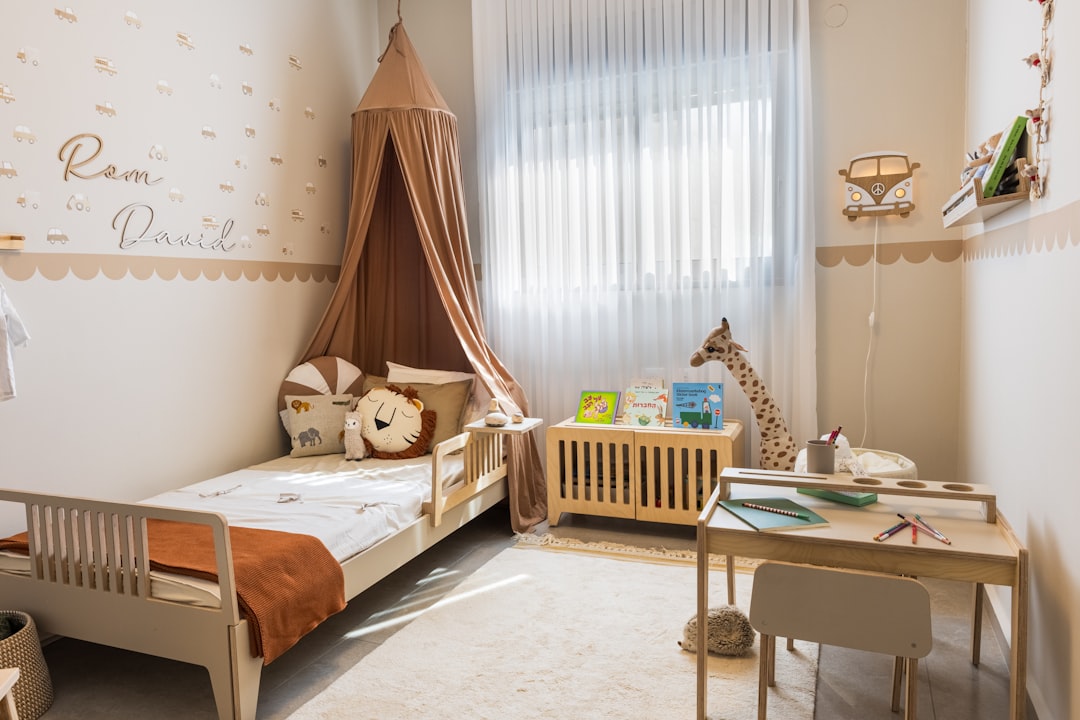
Photo by Shoham Avisrur on Unsplash


